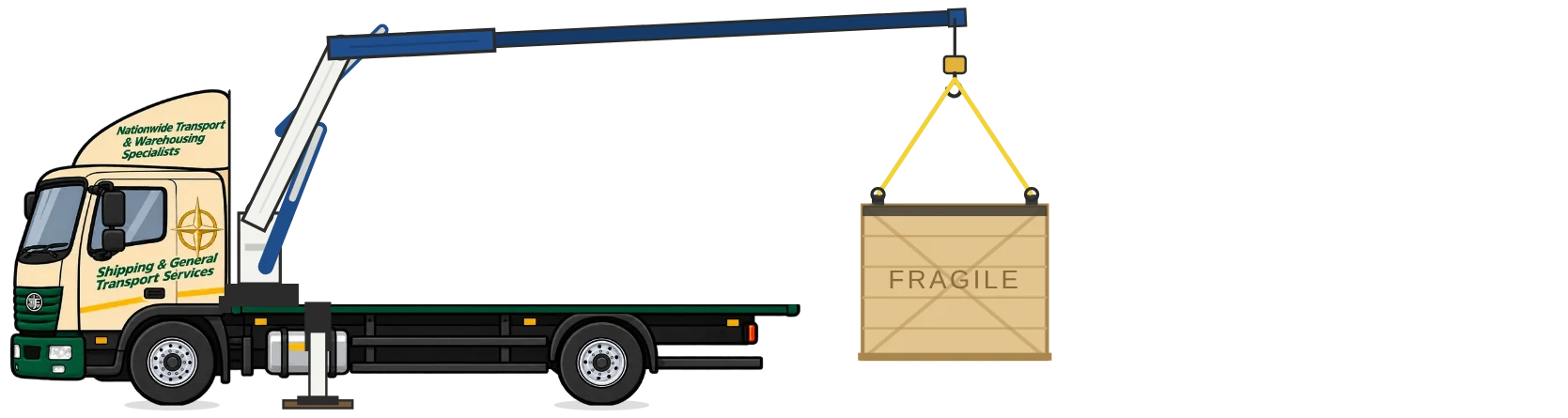
Crane truck coming? Is your site ready?
Our own crane trucks and trained crews do the lift. Check the way in, the ground, edges and power lines first, and send it with your request.
- 15 yrsAbout that long in power utilities and heavy industry
- 1–50 tHeavy lifts under our control at Germiston
- EverySling and D-shackle certified
Lift day, after the site check.
- 01
The site check
The way in, the ground and what’s under it, edges and power lines, the weight and the reach, sorted before the day.
- 02
Set up on firm ground
The truck parks clear of fill and services, a pad goes down and the outrigger onto it.
- 03
Look up, then lift
Clear of the power line’s zone, on certified slings, a crew member on the tag line.
- 04
Set down where it goes
Into its spot, slings off, crane folded, and our crew signs off.
Request a quote for your lift
Your lift
Step 1 of 7- Load
- —
- The job
- —
- Weight
- —
- Where
- —
- When
- —
- Site check
- Optional
Getting your site ready for the crane truck
Most of what decides a crane-truck lift is on your site: how the truck gets in, what it stands on, what’s under and over it, and how far the load goes. Sort these first and lift day goes to plan.
Getting in and standing firm
- The way inRoad-legal: up to 2.6 m wide, 4.3 m high
- Firm, level groundA pad under each outrigger
- What’s under itPipes, cables, manholes, duct covers
- Away from edgesTrenches, excavations, slopes
Overhead and the lift
- Power linesTheir operator sets the clearance
- The weight and the reachChecked against the truck’s load table
- Construction sitesCables under, over or on it found first
- RainLook at the ground again on the day
Our own crane trucks
An essential investment since we entered the power utilities and heavy industries market about 15 years ago. Heavy lifts of 1 to 50 tons under our direct control at Germiston.
Certified, to the last shackle
Our equipment is fully certified, right down to the very last sling and D-shackle. Safety isn’t negotiated or compromised.
Crews that bring it all
Trained in operations, rigging, safety, risk management, supervision, firefighting, and first aid levels 1 and 2, and self-sufficient while on site.
Where we operate
Our head office and 24-hour control centre are at 69–71 Barlow Road, Jupiter, Germiston, beside our depot, where heavy lifts of 1 to 50 tons run under our direct control, with an office in Durban.
- Germiston depot69–71 Barlow Road, Jupiter, Germiston 011 873 4786
- Durban · Greyville81 Berea Road, Greyville, Durban 031 305 0438

Part of Shipping & General Transport
Shipping & General Transport is a privately owned South African logistics company built on trustworthiness, perseverance and reliability. Crane Trucks is one of its specialist services: lifts with our own crane trucks and trained crews, for power utilities and heavy industry and anyone with a load to lift.
Visit shippingandgeneral.co.zaQuestions about lift day
Can’t find your answer? Our team is a phone call away.
Call 011 873 4786Do you hire out crane trucks?
We lift with our own crane trucks and trained crews: you tell us the load and the site, we do the lift. Our site doesn’t offer a crane truck on its own, so ask us if that’s what you need.
How much can your crane truck lift?
It depends on the truck and the reach: what a crane truck can lift falls as the load goes further out, and the truck’s load table shows it. Our site doesn’t state our crane trucks’ capacities, so send us the weight and the reach and we confirm. Heavy lifts at our Germiston facility run from 1 to 50 tons.
What do you need to know before lift day?
The load’s weight and where it goes, how far that is from where the truck can stand, the way in, the ground where the truck will stand and what’s under it, any trenches or slopes near it, and any power lines within reach. The site check above covers them and goes with your request.
How wide and high must the way in be?
A road-legal truck may be up to 2.6 m wide, and a vehicle and its load up to 4.3 m high (National Road Traffic Regulations, regs 223 and 224). Mirrors and the turn in need room too. Measure the narrowest gate and the lowest point overhead, and we check them against the truck we send.
What ground can a crane truck stand on?
Firm, level ground, with a pad under each outrigger. The industry guide presumes dense gravel carries over 600 kN/m², but loose sand under 100 and made ground only 25 to 50, and says pads don’t suit soft or loose ground without more work (CPA, Ground Conditions for Construction Plant).
What about pipes and cables under the site?
Buried pipes and cables, manholes and duct covers are hazards under a pad. Whoever controls the site holds the service plans; have them there on the day. On a construction site, the contractor must find any electrical cable under, over or on the site before work starts (Construction Regulations, 2014, reg 24(a)).
There are power lines near the site. What now?
By law, no one may come within a power line’s minimum safety clearance, in person or with anything, unless whoever operates the line allows it (Electrical Machinery Regulations, 2011, reg 19(5)). Eskom advises against cranes near power lines. Call Eskom or the municipality that runs the line before lift day, and tell us.
Can the truck stand next to a trench or excavation?
Not near the edge. If the outriggers must stand there, a geotechnical engineer assesses it first (CPA guide, Annex D.1). Better to find another spot.
Who is responsible for the ground information?
Whoever controls the site is responsible for everyone’s safety on it and keeps what’s known about the ground: site investigation reports, the health and safety file, service plans. The crane’s supplier provides its loads (CPA guide, 4.2, 9.2 and 10.1).
Is your lifting gear certified?
Fully certified, right down to the last sling and D-shackle, and our crews are trained in rigging, safety, risk management, supervision, firefighting and first aid. Our sister site works out what each sling leg takes.
Can a forklift or reach stacker do it instead?
Sometimes, on firm ground with room to drive up. Forklifts and reach stackers from 1.5 to 45 tons come with an operator, and our sister site checks what one can lift.
What if the load is too big for the road?
Then it’s an abnormal move, with permits, a risk analysis and a method statement, on our lowbeds or step decks. Our sister site builds the brief for it.
What does it cost?
We don’t publish prices. Answer the short questions in the quote form, add your site check if you like, and we’ll quote on your actual lift.
What are we lifting?
Five short questions and your contact details, plus your site check if you like. No prices online, just a quote on your actual lift.